
A well-designed wedding day timeline should feel almost invisible. It gives every vendor clear direction while giving you the freedom to enjoy the day without watching the clock. The goal is not to schedule every minute rigidly. It is to protect the moments that matter, anticipate transitions, and create enough breathing room for real life.
Start with the fixed points
Begin with the times that cannot easily move: venue access, ceremony start, sunset, catering service, transportation, and the contracted end time. These anchors create the framework for everything else. From there, work backward for preparation and forward through the reception.
Sunset is especially important for photography. If portraits in natural light are a priority, your ceremony and cocktail hour need to support that plan. Your photographer and planner can recommend timing based on the season, location, and whether you are doing a first look.
Give preparation more time than you think
Hair and makeup, wardrobe details, photographs, travel, and gathering personal items often take longer than expected. A calm morning usually includes a buffer after beauty services are scheduled to finish. This creates room for touch-ups, private moments, and the unexpected without delaying the ceremony.
Ask each beauty professional how many people they can serve at once and how long each service requires. The preparation schedule should identify who goes when, not simply state a general start time.
Build transitions into the plan
Walking to another part of a property, gathering family members, bustling a dress, moving guests into dinner, and opening reception doors all require time. These small transitions are where rushed timelines usually unravel. Five- or ten-minute buffers placed thoughtfully throughout the day can preserve the overall flow.
Create one master timeline
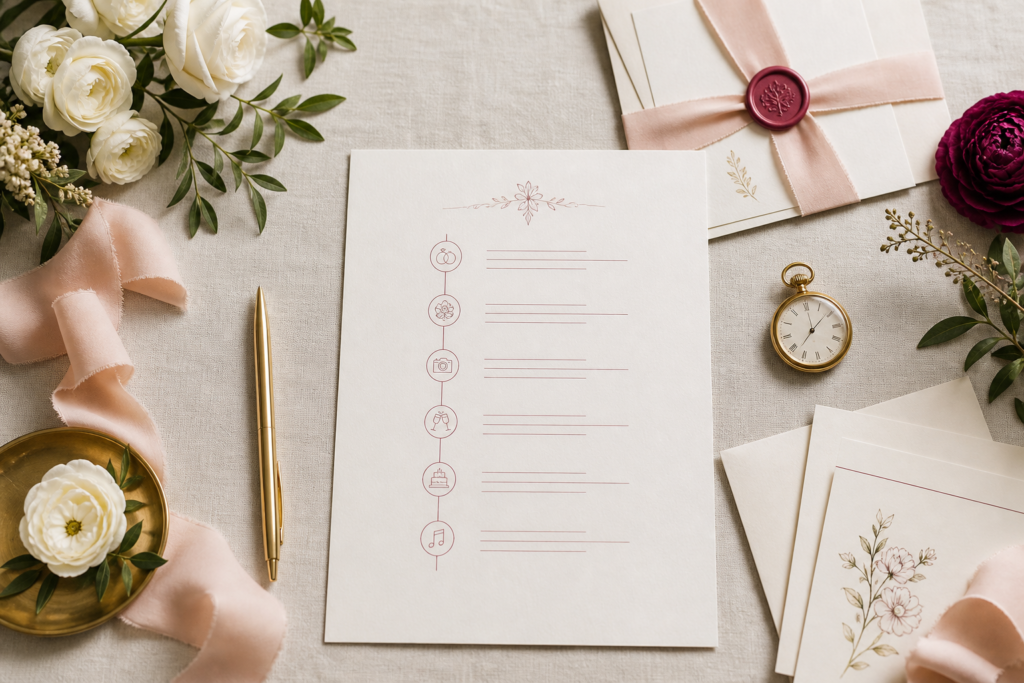
Your planner should combine the needs of the venue, photographer, filmmaker, catering team, entertainment, transportation, florist, and rental team into one coordinated document. Vendors may still keep detailed internal schedules, but everyone should work from the same master sequence.
A useful timeline also contains addresses, contact information, setup notes, family-photo combinations, special announcements, meal timing, and responsibility assignments. It answers practical questions before anyone needs to interrupt you.
Protect moments of presence
Schedule intentional pauses: a private moment after the ceremony, a few minutes to see the reception space before guests enter, or time to eat together. These are not empty spaces. They are often the memories couples value most.
The strongest timeline is detailed behind the scenes and relaxed from the couple???s perspective. If coordinating all those moving pieces feels overwhelming, explore our wedding planning and coordination services or schedule a consultation with Kristina Oo Events.